Wednesday, October 14, 2009

What kind of camera should I buy?

That is perhaps the most frequently asked question I hear. My usual response is to buy the one you like. By that I mean get one that feels right in your hands and looks like something you will want to carry around.

Second, buy the best camera you can afford or spend the most money you feel comfortable spending on a camera. You really do get what you pay for.

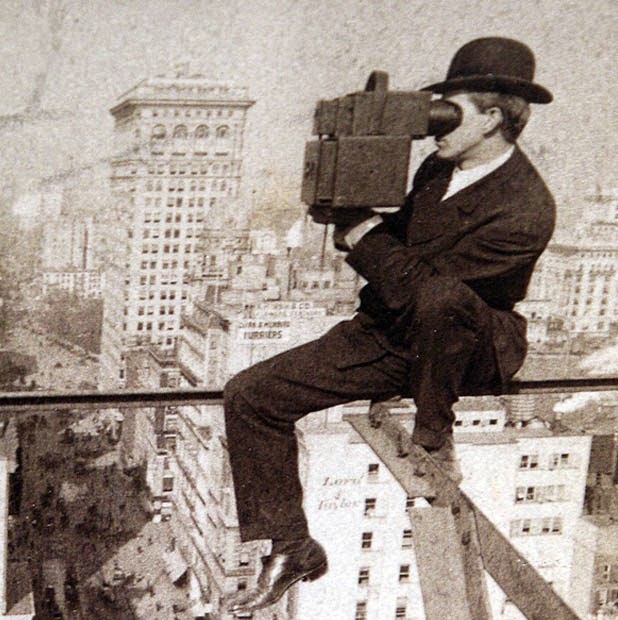
Beyond that the main consideration, in my opinion, is the viewfinder. The viewfinder is what you will spend your time looking at or through while you are making those beautiful photographs. There are three general types of viewfinders. The best is a single-lens-reflex which means that you are looking through the actual lens that the sensor is looking through. In the digital world the term is DSLR for digital single lens reflex.

DSLR cameras are generally the most expensive, but are far and away the most pleasure to use. You almost always see exactly what you are going to get, the original WYSIWYG design. Most have interchangeable lenses for greater versatility. Even if you never change lenses the bigger and brighter viewfinder of a DSLR is worth it. The downside, besides expense, is size. DSLR cameras are bigger and heavier than the other types of digital cameras. Carrying around a DSLR of any brand will mark you as someone who is serious about their photography.

The next type of camera/viewfinder is the electronic viewfinder camera or EVF. This type of camera has a LCD screen that is viewed through a magnifier. These cameras are almost as good as a DSLR and are generally smaller and less expensive. The advantage of the EVF camera is that menu items and other information can be read right off the screen in the viewfinder. Most EVF cameras also give an instant preview right after the photo is made so you can see what you got without taking your eye off the viewfinder. Most EVF camera do not offer interchangeable lenses but do have wide range zoom lenses as standard, so this may not be a serious issue. Most video cameras are of this type.

The last type of camera is the one that has no viewfinder at all, but only a LCD screen on the back. These have many limitations. The fact that they are hard to see in all but ideal lighting conditions is only one. The secret of sharp photos is to hold the camera steady. Holding the camera steady at arm’s length with no support against your face is almost impossible with this type of camera. I know from experience that an LCD screen is impossible to see in bright snow with sunglasses on, making the camera useless in these or many other conditions. Some companies, such as Hoodman, now are making accessory hoods that fasten to the LCD screen to make them useful in more varied light conditions.

Many, if not most, point and shoot cameras, and many more expensive cameras, are eliminating the eye-level viewfinder completely relying only on a LCD screen. This is a big mistake. When purchasing your new digital camera, make sure you can hold the camera up to your eye and see the image clearly through the viewfinder. A good sharp and easy to use viewfinder is the first step in selecting a camera and making great photographs.

Friday, October 9, 2009

Jim Mathis School of Photography

I have believed for some time that as we get older we need to be passing along the things we have learned over the years.

I got my first camera in the fourth grade and have been making picture almost every day since. I believe that is 18,980 days and it is certainly millions of photographs. I have sold cameras, owned a custom photo lab, taught photo classes, and of course been a professional photographer. I have photographed people in every situation imaginable and all kinds of machines and scenery in about a dozen countries.

It is now time to start doing what I can to teach others. With that in mind I am launching “The Jim Mathis School of Photography.”

Most photo classes are introductory level or teach out-dated technology. The first phase of my school will focus on taking people from where they are in their photography skills and help then move to where they want to be. The format will be one-on-one coaching, one day it a time. I think I can help most people dramatically improve their skills on one day.

If you would like to be a better photographer, no matter what your skill level is now, plan to spend a day with me. For an introductory price of $250 per day, I will figure out where you are and help you move to the next level.

I am also beginning to work on instruction videos and will offer workshops on various photo subjects in the future.

Go to: www.JimMathisSchoolofPhotography.com

Monday, October 5, 2009

The National Parks

We enjoyed watching the PBS Ken Burns special on the National Parks last week. Not surprising, there have been a number of photographers directly associated with the parks in various ways. William Henry Jackson’s photos were instrumental in the forming of the first National Park at Yellowstone. The Kolb Brothers had a studio at the Grand Canyon and helped promote it for many years. And of course Ansel Adams will always be associated with Yosemite.

In many ways the National Parks grew up with photography and the rise in attendance at the parks paralleled the growth in amateur photography. We have not been to all of the National Parks, but we have been to a few, and making photos at The Grand Canyon or Yellowstone are some of my fondest memories.

For many years our business was such that we took our annual vacation in the winter. For that reason we are among the privileged few who have been to Yellowstone, not once, but twice, in the winter when the park is covered with snow and the hordes of tourists have left for Florida.

We have a 30x40 print of a frozen Yellowstone Lake at sunrise which often hangs over our fireplace. My wife has a similar size 30x40 print of the Grand Canyon in winter over her desk.

Winter is coming. This can be a glorious time for photography. I probably won’t be going to one of the National Parks this winter, but I will definitely be getting out photos and albums and enjoying some hot chocolate while thinking about the great times skiing, hiking, and snowmobiling in sub-zero weather in the most beautiful of God’s creations.

The above photo is the Grand Tetons in January.

Monday, September 14, 2009

Art Westport


We had a good time at Art Westport last weekend. This was our first experience at this show, but hopefully not our last. Though the sales of framed photographs was not what we had hoped, we practically sold out of panoramic notecards. More importantly, we saw many old friends and made new acquaintances.

The Westport art fair draws an eclectic mix of people which makes for wonderful people watching and good conversations. My panoramic photo of a London street scene attracted the attention of an older gentleman who said he had driven double-decker buses in London as well as cross-country buses through Europe. He told me about the old Routemasters with their crash-box transmissions and manual steering. The new buses have automatic transmissions and power steering even though they are still double-deckers.

In the words of Yogi, “You can hear a lot just be listening.”

We saw lots of dogs walking their owners, but no cats. I guess cats aren’t all that into art.
I took a break from the art fair to play with my band, Sky Blue, Saturday night. We played to a packed house at Homer’s. Overall, a great weekend.

Next weekend we will be at the Zona Rosa Art Festival near KCI and the week after that at the Overland Park Fall Festival. I expect to be better stocked with notecards this time.

Wednesday, July 29, 2009

Digital Resolution

There is a lot of confusion concerning resolution in digital photography. In the days of film, we just tried to get as much resolution as possible, figuring the more the better. With digital imaging, the subject is a lot less subjective and a whole lot more specific.

Cameras are sold based on the number of individual pixels, or picture elements, they can achieve. 35mm film, under ideal conditions, could possibly show the equivalent of about 10 million pixels. In reality, a five-meg, or 5 million pixel camera, is about equal to 35mm film in resolution.

But the number of pixels is far from the whole story in digital photography. With virtually every camera outside of camera phones, producing images with more than five megapixels, other qualities become more important. The quality of the lens, the type, size, and quality of the sensor, and of course the skill of the photographer are all more important than the number of pixels.

In practical use, the final use of the image determines the resolution necessary. The number of pixels in an image is determined by the media and the size of the image. The most common resolution of an image to be printed on paper is 300 dpi (dots per inch.) If the final result is an 8x10 print the resolution of the image would be 300dpi x 8 inches by 300dpi x 10 inches, or 2400 X 3,000 pixels. 2400 times 3,000 equals 7.2 meg. If the camera produces less than 7.2 megapixels, additional resolution must be interpolated by the computer. This is relatively easy and gives good results. A camera with more than 7.2 megapixels has excess capacity for an 8x10 print. The additional resolution is not only unnecessary, but can degrade the image and only increases the file size.

If the image is going to be viewed on a computer screen, the resolution is about 72 dpi. Web designers usually think of the image size in terms of pixels. If the resolution of a computer monitor is 600x800 pixels, a 400-pixel wide image will cover half the screen. An image in the corner of a web site might be 100 pixels wide. If I post a nice size 200 x 300 pixel image on my web site it has 60,000 pixels, it is a 60K image. If I shot the photo with a 10-meg camera, I must throw away more than 99% of the information.

I often get requests for “high-resolution” photos. I later find out that they are going to be used on a business card, brochure, or even a web site. The size of the final image is the determining factor in the needed resolution.

A good analogy might be to compare camera pixels to horsepower of a car. A 500 horsepower car might be cool, but if all of your driving is in traffic under 40mph, you have a lot of excess capacity and are probably wasting gas. The arguments in favor of a 500HP car are about as ambiguous as they are for a 20-Meg camera, based more on bragging rights than actual necessity.

The confusion over resolution may result from confusing sharpness with resolution. Sharpness is a relative term and has to do with what a picture “looks” like. The factors affecting sharpness are camera movement (the biggie), focus, exposure, and the subject. Maximum sharpness is not always necessary and is often undesirable as in the case of portraits. Professional photographers learn how to use relative sharpness to best advantage.

The format of the file has no affect on resolution. JPEG, TIFF, PSD, RAW, etc are all ways of storing data and have no affect on the resolution. The only affect they have on quality is in the way they are used.

I have seen publications request specific file formats under the guise of better quality. I presume that they had received low quality images in the format of JPEG, or whatever, and concluded that the format was the problem. Poor images can be any format. I will address these formats in a later post.

Tuesday, June 30, 2009

"Mama Don't Take My Kodachrome Away"

This week the Eastman Kodak Company announced the end of Kodachrome. Kodachrome film was introduced in 1936 as the first successful color film. In 1986, my wife and I attended a celebration in Rochester, NY marking the 50th anniversary of the introduction. 1936-2009, 73 years is a good run for any product.

I shot my first roll of Kodachrome in about 1960 and carried on a love/hate relationship with it for the next 35 years. Its color was garish, the exposure was ultra-critical, and the processing extremely specialized, but it was still the best color film we had for many years.

I have slide cabinets full of gorgeous Kodachrome slides made primarily in the 70’s and 80’s. But I have also thrown away thousands of slides that were over or (mainly) under-exposed. Getting the exposure right was a real pain, and you never knew how you did until, a few days later, when the little yellow boxes came back from the Kodak labs in New York, Chicago, or Dallas.

Bracketing, which is a technique of shooting various exposures of the same subject to make sure that you have one at the correct exposure, became routine among pros using Kodachrome.

This week I sold two slide projectors and 25 slide trays on Craig’s List. I kept back one projector and two trays just in case I ever needed them. But, basically it is the end of an era. Digital imaging is clearly superior as far as I am concerned. (The only down sides are questions of archiving and the fact that the quality of the image of digital projectors are not yet as good as projecting a Kodachrome slide with a professional slide projector.)

Kodachrome is now part of our heritage. In the future us old-time photographers will set around old-folks homes and talk about our struggles and victories with Kodachrome and its much maligned brother, Ektachrome. I am looking forward to it. I have the slides to back up my war stories.

Monday, June 29, 2009

The Art of the Car


The Kansas City Art Institute’s Art of the Cars Concours was this weekend. About 180 gorgeous cars were on display on the lawn of the art school. As a photographer and car lover, I had a great time walking around, chatting with car owners and enthusiasts and making photos.


The interesting thing about photograph as a hobby is that it is nearly always tired to another hobby. People photograph their pets, their coin collection, birds, cars, or just about everything else that interests them. I would be impossible to be a photographer and not be interested in other things because you wouldn’t have anything to photograph.


The bulk of my professional work is photographing people because I love people. But as a hobbyist, I like all kinds of thing – and cars are certainly high on that list.


To see my photos from the Art of the Car, 2009, CLICK HERE.